



A commercial guide to dry mixed recycling
Dry mixed recycling (often shortened to DMR) is one of the simplest and most effective ways to recycle your business’ everyday waste. You can place a range of recyclable materials, including paper, cardboard, plastics, and cans into a single bin, without needing to sort them on site – which is particularly useful if you’re managing high volumes of multiple waste types.
We’ve put together this handy commercial guide to dry mixed recycling, covering everything from what DMR actually is to how the process works behind the scenes, so you can determine whether these recycling bins could benefit your business.
What is dry mixed recycling?
Dry mixed recycling is a recycling method where several recyclable materials are collected together in one container and later separated at a specialist facility. All materials within a DMR bin must be clean and dry to be recycled effectively; food residue, liquids, and non-recyclable items can contaminate the load and reduce how much material can be recycled.
What can go in a dry mixed recycling bin?
Dry mixed recycling bins are designed for everyday recyclable materials. As a general rule of thumb, all items should be empty, clean, and dry before being placed into a DMR bin.
The typical materials accepted in DMR bins include:
- Paper, such as newspapers, magazines, office paper, and envelopes
- Cardboard, including boxes, packaging, and cardboard sleeves
- Plastic bottles, tubs, and containers
- Metal packaging, such as aluminium cans, steel food tins, and foil trays
What can’t go in a dry mixed recycling bin?
However, there are some items that can’t be processed through DMR recycling so should be kept out of the bins to avoid contamination. These include:
- Food waste or food-soiled packaging
- Liquids of any kind
- Glass bottles and jars
- Plastic film, carrier bags, and soft plastics
- Coffee cups and crisp packets
- Hazardous waste, including batteries, chemicals, and paint tins
- Sanitary waste, nappies, and tissues
- Wood, textiles, ceramics, and polystyrene
If you place one of these items into your DMR bin, this could lower the quality of the recovered materials – and in some cases, your entire load may be rejected.
How dry mixed recycling is collected and sorted
1) Collection
Once your dry mixed recycling bin is full, it is then collected from your premises on a scheduled basis that suits your operational needs and waste volumes.
2) Transportation
The collected materials are then transported to a specialist Materials Recovery Facility (MRF). This usually only requires one collection as all the different recyclables are bundled together, helping to reduce emissions from multiple collection vehicles.
3) Sorting
Your dry mixed recycling materials are sorted at the MRF using a combination of automated sorting technology and manual checks. Items are sorted by their material type i.e. paper, metal, plastics.
4) Reprocessing
Once the materials have been separated, they are baled and sent for reprocessing, where they will be turned into new raw materials for manufacturing. Modern waste processing facilities are designed to recover as much recyclable material as possible while minimising waste.
The benefits of dry mixed recycling for your business
Stay compliant with waste regulations
Using a commercial dry mixed recycling service helps you effectively separate recyclable materials from general waste and ensure they’re sent for recovery, which reduces the risk of non-compliance and avoids any potential issues during audits or inspections.
Keep your waste disposal costs down
By diverting recyclable materials away from landfill, dry mixed recycling helps to reduce the amount of general waste that your business produces. This can help you manage your disposal costs more effectively and avoid the ever-increasing landfill taxes.
Improve your site’s recycling rates
One of the major benefits of dry mixed recycling is that you don’t need to worry about separating materials on site. Everything is placed into one clearly labelled bin, which makes it much easier for you and your team to recycle effectively – in turn improving your site’s recycling rates.
Get dry mixed recycling right with McCarthy Marland
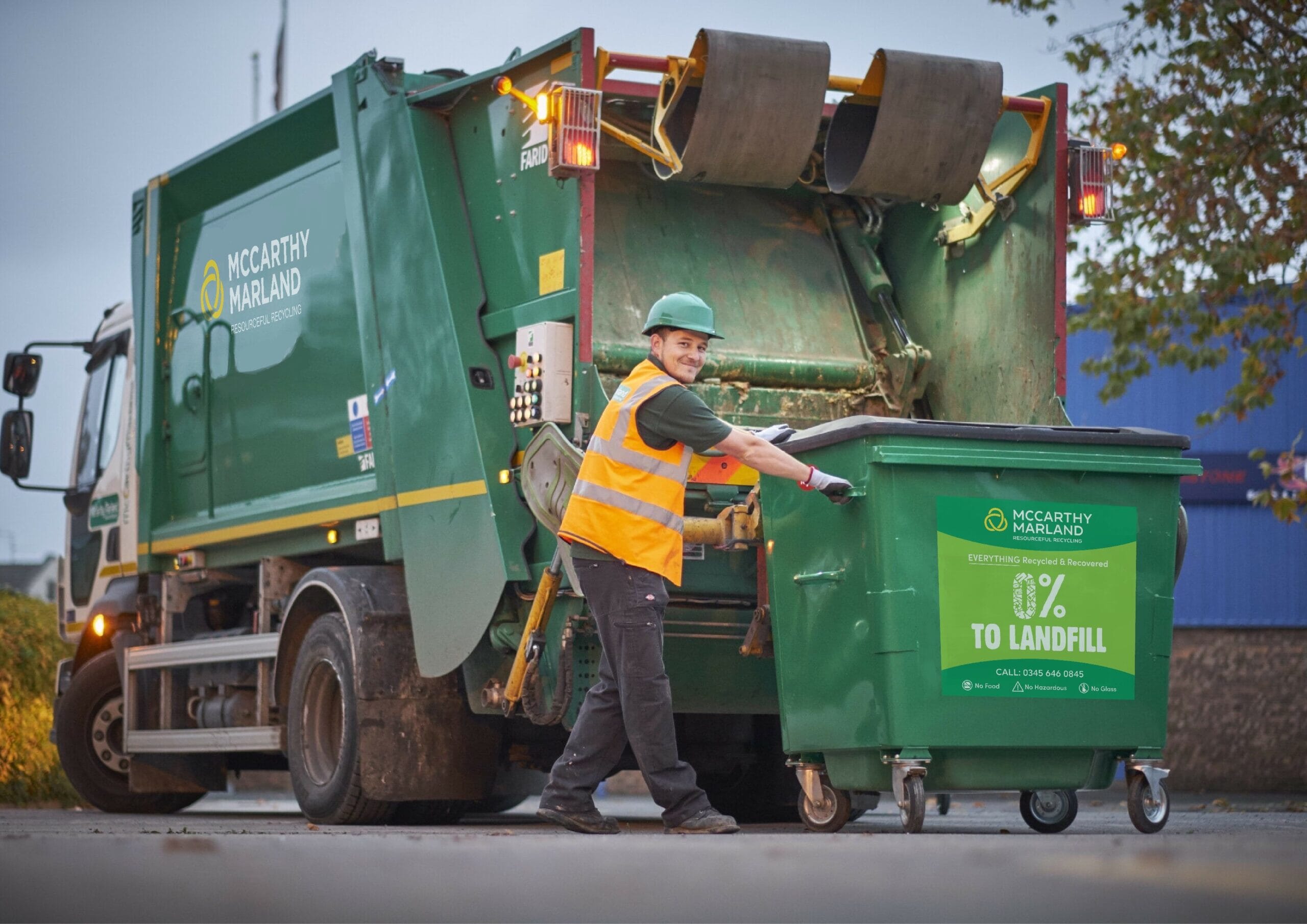
At McCarthy Marland, we provide a range of commercial dry mixed recycling and recovery wheeled bins to businesses across the South West, from 240L all the way up to 1100L. You can bundle all recoverable and recyclable waste, excluding food and glass, into one bulk wheelie bin container, and we’ll collect it from your premises on a scheduled basis that suits you.
Once we’ve collected your waste from site, we’ll then bring it back to one of our recycling centres to extract all suitable recyclable materials, with the remaining residual material processed into Refuse Derived Fuel (RDF). We’re exceptionally proud to achieve an average recycling rate of 95% across all our facilities; so when you work with us, you can rest assured that your waste won’t end up in landfill.
Get in touch to discover how our dry mixed recycling services could benefit your business.
FAQs
Do I need to rinse containers before putting them in a DMR bin?
Yes, your containers should be empty and reasonably clean before putting them in a DMR bin. This helps to prevent contamination, as food residue and liquids can reduce the quality of recyclable materials and lead to rejected loads.
Can plastic film go in dry mixed recycling?
No, soft plastics and plastic film should be kept out of dry mixed recycling bins unless a dedicated collection is provided, as these materials can tangle sorting equipment at recycling facilities.
Is dry mixed recycling suitable for small businesses?
Yes, dry mixed recycling works well for businesses of all sizes, from small offices to large commercial and industrial sites. You can scale your collections up or down as your waste volumes change.
What your business needs to know about simpler recycling in 2026
As we move through 2026, you can’t afford to put the UK’s simpler recycling reforms on the back burner. Launched last year to create a consistent approach to recycling in the UK, the government’s simpler recycling regulations introduced some key changes that impact how your organisation manages its waste on a daily basis.
We’re here to help you make sense of what’s required when it comes to simpler recycling in 2026, and how to get it right without disrupting your operations.
What are the simpler recycling regulations?
The simpler recycling initiative was introduced to tackle confusion around recycling rules and improve recycling rates across England. Businesses are required to segregate key recyclable materials rather than mixing everything together and have separate waste streams for:
- Dry mixed recyclables, including paper, card, plastics, metals, and glass
- Food waste
- Residual (non-recyclable) waste
The overall aim of simpler recycling is to reduce the amount of waste sent to landfill, improve the quality of recycled materials, and support a more circular economy.
Key deadlines your business needs to be aware of
Businesses, schools, hospitals, and other non-domestic premises with 10 or more employees have been required to comply with the legislation since 31st March 2025. Now we’re firmly in 2026, there’s no room for error for establishments that fall under this criteria.
Businesses with less than 10 employees have a later deadline of 31st March 2027 to comply with the regulations. However, we highly recommend preparing early to avoid disruption to your operations.
How simpler recycling affects your business
The UK’s simpler regulation reforms might require your business to make some major operational changes. You’ll need to have the appropriate size and type of containers on site, provide clear signage on which materials go where, and invest in a reliable waste collection service. You’ll also need to provide evidence that you’re separating waste correctly if your local authority or an external regulator requests to see this.
If you fail to meet these business recycling requirements, you could be faced with enforcement action, including warnings or fines. You may even be required to change your waste arrangements at short notice, which could seriously disrupt your operations. Beyond the legal implications, non-compliance with the simpler recycling regulations could also damage your reputation with customers and stakeholders who are concerned about sustainability.
How to ensure simpler recycling compliance in 2026
1) Set up separate collections for food and dry waste
The first step to complying with the simpler recycling regulations is to carry out a waste audit. This involves reviewing the quantity and type of waste your business produces – for example, do you generate food waste on site? And how much paper and packaging are you dealing with each week? This will help you determine which waste containers you require on site, and how frequently your waste needs to be collected.
2) Train your staff on their waste responsibilities
Even the most well-designed recycling system will fall short if your staff aren’t on board. Invest time in staff training and ensure that your employees understand their responsibilities when it comes to separating waste streams. We recommend having clearly labelled waste containers on site, supported by clear signage on what goes where. This will reduce confusion and ensure that all materials are placed in the correct containers.
3) Regularly review your waste setup
The waste setup that works for you today might not necessarily work tomorrow. That’s why it’s important to regularly review your waste arrangements and make any adjustments as required. Ongoing reviews will help you spot any contamination issues early, upgrade/downgrade your bin sizes, or update your collection frequencies as your business’ waste needs change.
4) Choose the right waste management partner
Your waste contractor will play a key role in helping you comply with the simpler recycling regulations. Look for a provider that understands the finer details of the legislation and can offer tailored solutions to suit your business’ needs – including the provision of wheelie bins and flexible collections that work around your schedule.
McCarthy Marland: your simpler recycling partner for 2026
At McCarthy Marland, we’re proud to help businesses across the South-West to effectively segregate their waste and boost their recycling rates. We offer a wide range of commercial waste management services, including wheeled bins, skip hire, and RoRo skip hire, supported by flexible waste collections that fit around your schedule.
Not sure whether your current setup is compliant? Our team can help review your current setup, recommend improvements, and ensure you’re meeting the requirements for simpler recycling in 2026. Get in touch to arrange your free waste audit.
FAQs
Is simpler recycling mandatory for businesses in 2026?
Yes, simpler recycling is already mandatory for businesses with 10 or more employees and fully applies throughout 2026. These organisations are expected to have compliant waste separation and collections in place as part of their daily operations.
Do all businesses need a food waste collection under simpler recycling?
If your business produces food waste, you must arrange a separate food waste collection under the simpler recycling rules. This applies to all businesses in catering, hospitality, and any other workplace where food preparation or consumption takes place.
What happens if my business doesn’t comply with simpler recycling?
Non-compliance with the simpler recycling regulations can result in warnings, fines, or enforcement action from regulators. Over time, it can also impact your reputation with eco-conscious customers and stakeholders.
Do the simpler recycling rules apply across the whole of the UK?
Simpler recycling currently applies in England as part of the wider UK recycling reforms. Scotland, Wales, and Northern Ireland all have their own waste and recycling regulations.
How to deal with excess cardboard after Christmas
The Christmas period is one of the busiest, and waste-heaviest, times of the year for many businesses. Thanks to increased stock deliveries, seasonal packaging, product returns, and online fulfilment, many commercial premises find themselves overwhelmed with cardboard waste. It’s vital that you stay on top of your Christmas cardboard disposal and cardboard recycling to keep your operations running smoothly throughout the festive period.
Below, we outline some practical ways that your business can reduce its environmental impact, stay compliant with regulations, and keep your site clear of excess festive packaging.
1) Ensure your team are trained in correct recycling procedures
It’s important that your staff understand how to handle, store, and sort your cardboard for recycling. You can support this by:
- Providing clear internal signage to help your staff identify the correct recycling streams.
- Sharing simple step-by-step instructions so that everyone knows how to flatten boxes and separate materials.
- Holding short refresher briefings to reduce contamination and keep waste areas tidy.
- Training your team to identify contaminants so that you can process your festive waste more efficiently and avoid unnecessary disposal costs.
2) Correctly prepare your cardboard for recycling
Proper preparation is key to keeping your business compliant and your waste management costs low throughout the festive period. Here’s what you should do with your cardboard after it’s been used:
- Flatten your cardboard boxes to ensure maximum bin capacity. If your site is on the larger side, you might want to hire a baler to compress your cardboard into compact, easy-to-handle bales.
- Remove contaminants like plastic straps, film, foam inserts, void fill, laminate coatings, and excessive tape from your cardboard. Clean cardboard that’s free from contaminants has a much higher recycling value.
- Keep your cardboard dry by storing it under cover or in a dry waste area. Wet or food-soiled cardboard can’t be recycled, so make sure it’s stored under a designated shelter.
3) Reuse cardboard within your business operations
Reusing your cardboard will help to reduce the amount of waste your facility produces and lower your operational costs. Here are some ways you can reuse cardboard within other areas of your business:
- If you’re a retailer or online seller, consider reusing your delivery boxes for customer returns or internal transfers.
- Warehouses and stockrooms can use sturdy boxes for storage and organisation to help manage overflow stock during peak festive trading periods.
- Boxes can also be repurposed for internal logistics, allowing you to easily move goods between different departments or sites.
4) Plan ahead with seasonal cardboard recycling services
It’s easy to underestimate how much cardboard waste you’ll produce over Christmas. To avoid overflowing bins or skips, consider implementing the following:
- Temporarily increase your collection frequency to empty your waste containers more often.
- Upgrade to larger wheelie bins or use additional recycling containers so you have more space to house your cardboard waste.
- Hire dedicated cardboard-only bins to cut down on the time you need to spend sorting your waste.
- Hire an on-site compactor or baler if your premises is on the larger side to streamline your operations.
5) Partner with McCarthy Marland
Our expert team at McCarthy Marland are here to support your business with tailored cardboard recycling solutions throughout the festive season. We offer a range of skips, RoRo containers, recycling and recovery wheelie bins, and static and portable compaction balers for all your Christmas cardboard disposal needs.
We’ll deliver your container directly to your site and collect it as often as needed to suit your schedule. Once we’ve collected your cardboard, we’ll take it back to one of our recycling centres for processing and recover as much recyclable content as possible. We’re proud to achieve an average recycling rate of 95% across all four of our facilities, ensuring as little waste is sent to landfill as possible.
Get in touch to discover how we can help with your cardboard recycling post-Christmas.
FAQs
Can businesses recycle all types of cardboard packaging generated at Christmas?
Most commercial cardboard is recyclable, but waxed, laminated, or heavily contaminated materials can cause issues during the recycling process. Ensure that you separate materials early on to help avoid contamination and keep your recycling streams clear.
Should businesses remove staples, tape, and labels before recycling boxes?
Yes, we recommend removing tape and large labels before recycling your boxes. This helps to improve the quality and value of recyclable cardboard, and ensures smoother processing at recycling facilities. However, it’s fine to leave small staples or labels on your boxes.
How can businesses prevent cardboard bins from overflowing during the Christmas season?
Overflowing bins are usually a sign that your waste output has increased beyond your existing service capacity. Increasing your collection frequency, upgrading to larger containers, or adding temporary additional bins can help you stay on top of the surge.
5 clever recycling ideas to cut business waste before Christmas
The festive season is one of the busiest and most wasteful times of the year for UK businesses, with the additional waste from Christmas estimated to exceed 3 million tonnes in the UK this year. From packaging and decorations to seasonal food and excess stock, Christmas brings a significant rise in waste generation across every sector – so it’s vital that you stay on top of your waste ahead of the holidays.
Here are five clever recycling ideas for businesses to help you cut your commercial waste this Christmas.
Commercial recycling tips for Christmas waste
1) Audit your waste before the festive rush
Before you even think about introducing any new recycling initiatives, you should conduct a business waste audit. Take stock of what types of waste your business generates (packaging, paper, food, general waste) and where the bulk of it comes from. Once you know what your biggest problem areas are, you can introduce more targeted recycling solutions to combat these. Here are some ideas below…
2) Get creative with packaging recycling
Christmas often results in an influx of packaging waste, including boxes, bubble wrap, and wrapping paper. Instead of letting it all pile up, think of some creative ways you could reuse or recycle these materials, such as:
- Reuse cardboard boxes for storage, returns, or even as temporary bins in back-of-house areas.
- Shred old packaging to use as protective filler for outgoing parcels and reduce the need for new packing materials.
- Partner with local charities or schools that may be able to repurpose materials for crafts or educational projects.
- Encourage your suppliers to collect and reuse your pallets or delivery boxes.
- Set up a designated recycling station so your staff can separate cardboard, plastics, and paper while they unpack deliveries.
- Switch to recyclable or biodegradable wrapping options for products or gifts to help reduce landfill waste over Christmas.
3) Recycle your office supplies and decorations
As the year draws to a close, why not take this opportunity to declutter your office, warehouse, or retail space? Consider which items can be reused, repaired, or recycled before sending them straight to landfill. Here are some ideas to help spark your imagination:
- Donate or resell equipment and furniture that is still usable through local charities, second-hand markets, or online platforms.
- Refurbish or repair electronics instead of replacing them. Consider partnering with IT refurbishers who can safely wipe data and extend the lifespan of your computers and monitors.
- Recycle your batteries, cables, and small electronics at approved collection points or use specialist WEEE waste services.
- Repurpose last year’s Christmas decorations or get creative and make your own decor from leftover packaging or fabric offcuts.
- Encourage your staff to take part by running a “clear-out day” where everyone sorts and recycles old office items.
4) Introduce a food waste recycling scheme
Food waste often increases dramatically during December, so it’s vital that you set up a proper food recycling system. Start by identifying where your food waste comes from, and then put clear procedures in place to manage it. Make sure you provide well-labelled food waste bins in communal areas so your team can easily separate food scraps from general waste.
If you work in food service or hospitality, consider planning your menus and portions carefully to prevent over-ordering. Any unavoidable waste can then be composed or sent for food waste collection through a professional waste management provider like McCarthy Marland.
5) Make the most of wheeled bins before the Christmas rush
If your business operates in hospitality, offices, or events, you’ll probably generate a lot of mixed waste in the weeks leading up to Christmas – from packaging and food waste to bottles, cups, and disposable decorations. Consider hiring some more wheeled bins before the festive season begins to stay on top of your waste.
Having dedicated bins for recyclables, food waste, and general waste makes it much easier for your team to separate materials on-site and keep your business tidy during this busy period. Make sure you organise regular collections to avoid overflowing bins or last-minute clear-outs, which can dramatically increase your disposal costs.
Helping you stay on top of your commercial waste this Christmas
Feeling inspired by our Christmas recycling ideas for businesses? Now is the perfect time to put them into action and get your site ready for the festive season.
At McCarthy Marland, we offer a complete range of commercial waste management services to help businesses across the South-West stay compliant and sustainable all year round. From commercial skip hire to hospitality/office/event site bins, all our services are designed to help you cut business waste and maximise your recycling efforts, just in time for the festive rush. We can plan our collections around your operations, helping you stay productive during the busiest period of the year.
Contact us to discover how we can help you manage your business waste this Christmas.
How to maximise recycling with skip hire services in the UK
According to official government statistics, the UK recycling rate currently sits around 45%. But there’s still a way to go to achieve the 2035 target of 65%. Now more than ever, we all need to play our part in cutting down landfill waste and boosting recycling wherever possible.
Whether you’re tackling a home renovation or managing a busy construction site, hiring a skip is often the most efficient way to handle waste. But what actually happens to your waste after it’s placed in a skip? Is it recycled, or does it end up in landfill? And how can you maximise the amount of waste that’s recycled when hiring a skip?
In this blog, we explore everything you need to know about recycling and skips, and share how our skip hire services can help you do your bit for the planet.
Do skip hire companies recycle?
It all depends on who you hire. At McCarthy Marland, we’re proud to achieve an average recycling rate of 95% across all our facilities, including waste from skips – and we’re constantly investing in better technologies and methods to increase that figure even further.
Once you’ve finished with your skip, we’ll collect it and take it back to one of our recycling centres for processing. Using a combination of mechanical and manual sorting processes, we’ll recover as much waste as possible from your skip for recycling. Any waste that we cannot recycle is safely incinerated to recover electricity, and food waste is broken down to produce biogas in a process known as anaerobic digestion.
What can you recycle in a skip?
So, we’ve explained how our skip recycling process works. But which types of waste can be recycled in a skip?
Our skips are suitable for a wide range of materials:
- Wood including broken furniture and pallets
- Metal such as pipes, wiring, cans, and scrap metal
- Cardboard & paper from packaging and office clear-outs
- Plastic including hard plastics like containers and pipes
- Garden waste such as branches, leaves, and soil
- Construction waste including bricks, rubble, concrete, and plasterboard
- Glass from pubs, bars, restaurants, and events
Read our skip hire FAQs for a full list of what can and can’t go in our skips.
How to maximise recycling when hiring a skip
Want to make sure you recycle as much waste as possible when hiring your skip? Here are a few ways you can boost your skip recycling rate:
1) Separate waste types wherever possible
Although we do sort materials at our transfer stations, pre-separating your waste on site can make the recycling process much more efficient and ensure that recyclable materials don’t get missed. If you’re generating a large amount of one material, like cardboard, metal, or green waste, then you might want to consider hiring multiple skips for different waste streams.
2) Load your waste correctly
The way you fill your skip can make a big difference in how much waste is recycled. Start with flat, heavy items at the bottom, and then layer lighter or awkwardly shaped items on top. This not only maximises space, but also protects recyclable materials from being crushed or contaminated. Our blog on the best way to fill a skip offers practical advice to help you load your skip efficiently.
3) Don’t overload your skip
Filling your skip beyond its capacity can cause collection issues and make it harder to recycle your waste. If you overload your skip or pack it unevenly, you could crush recyclable materials, making them difficult to recover. Always keep your waste level with the top of the skip, and distribute it evenly to ensure your waste can be transported safely back to the recycling centre.
4) Avoid contaminating recyclable materials
If you place food waste, liquids, or hazardous materials into your skip, this can prevent otherwise recyclable items from being processed correctly. These waste types can spoil entire loads, making it difficult or even impossible to separate materials and recycle them effectively. To get the most out of your skip and ensure that waste can be sorted properly, check out our ‘what can go in a skip’ guide before loading.
Our skip hire services can help you recycle with confidence
Planning a clearout or construction project and want to dispose of your waste responsibly? Our skip hire services can help you do just that. When you hire one of our skips, you can rest assured that you’re helping to divert waste away from landfill and contribute to a more sustainable tomorrow.
We offer a wide range of skip sizes to suit every project, no matter how big or small. From 4-yard mini skips to large 40-yard roll-on roll-off containers, we can help you choose the right skip for the job and provide you with all the support you need to maximise your recycling efforts.
Book your skip hire today and get ready to recycle with confidence.
How commercial wheelie bin hire can boost your business’ recycling rates
In 2025, the waste management industry is undergoing significant change, with lots of new regulations and national strategies being introduced to help boost recycling rates. Earlier this year, the simpler recycling rules were introduced across England to make it easier for businesses to sort and separate their waste – and households will be following suit in 2026.
Commercial wheelie bin hire can help your business reduce waste, improve your recycling practices, and stay compliant with the latest regulations. Here’s how…
Separate materials at the point of disposal
One of the biggest barriers to effective recycling is a lack of infrastructure. If your workplace doesn’t have clearly labelled bins or they’re too small to hold all your waste, then recyclable materials will often end up in the general waste bin. This means more waste sent to landfills, and more missed opportunities to recover valuable materials that could otherwise be recycled and reused.
Our commercial wheelie bins are essentially high-capacity recycle bins with wheels. We offer a wide range of wheelie bin sizes, from 240-litre bins (ideal for smaller spaces) all the way up to 1100-litre containers (suitable for larger operations). Having the right number and size of bins on-site will allow your team to separate materials at the point of disposal, which can have a huge impact on your business’ recycling rates.
Less contamination, more recycling
Contamination is a key concern in the new simpler recycling regulations. If recyclable materials are mixed with general waste, food residue, or liquids, they often can’t be processed correctly, and may end up being rejected entirely. This not only sends more waste to landfill but can also increase your disposal costs.
Our recycling bins with wheels are clearly labelled for specific waste streams, including general recyclable materials, food waste, and glass waste, which helps to reduce confusion among your team and avoid any cross-contamination. This results in cleaner recycling streams and fewer rejected loads. We can also offer advice on best practices for on-site bin placement and staff training to help your business meet its recycling targets.
Keep your site clean and tidy
Overflowing bin bags and general waste build-up doesn’t just look unprofessional – it can also be a genuine health and safety risk. A cluttered waste area can attract pests, cause unpleasant odours, and even become a fire hazard if it isn’t managed properly.
Our wheelie bins are specifically designed to cope with a wide range of commercial recycling needs. They’re robust, weather-resistant, and easy to move around your site, so that you can easily position them where they’re needed most to make recycling convenient and consistent for your team. We also supply lockable lids on our 660-litre and 1100-litre bins, which can help to deter pests and keep your waste firmly where it belongs.
Save time, money, and resources
Having a well-organised recycling system helps to streamline your business’ operations. When your team knows exactly where to dispose of each type of waste and the right bin is closer to hand, the whole process becomes quicker and more efficient. Less mistakes are made and you won’t need to re-sort waste after it’s been disposed of.
By reducing the volume of your general waste, you’re also helping your business save money. The current standard landfill tax rate is £126.15 per tonne, which can make a huge dent in your finances. When you hire one of our wheelie bins, we’ll tailor our collection services to fit around your needs, so that you’re not paying extra for pickups you don’t need and always get the most from your recycling setup.
Improve your recycling efforts with McCarthy Marland
At McCarthy Marland, we’re proud to have helped hundreds of businesses across the South of England to manage their waste more responsibly. Whether you’re managing a busy construction site or running a small independent cafe, we can help advise you on which bins are right for your business, and arrange collections to suit your schedule.
We’re proud to achieve average recycling rates of 95% across all four of our recycling centres, with all remaining waste being recovered as Energy from Waste. When you hire your wheelie bins from us, you can rest assured that your waste will not end up in landfill.
Get in touch to discover how we can help boost your business’ recycling rates.
The use of recycled aggregates in sustainable construction
Did you know that the construction industry accounts for around one-third of the world’s waste, and contributes to at least 40% of global carbon dioxide emissions? In light of these shocking statistics, there’s never been a more important time to rethink how we build, and what we build with. Enter recycled aggregates: a key component in sustainable construction.
In this blog, we delve into all things recycled aggregates, and explore how they are contributing to a more sustainable construction industry.
What are recycled aggregates?
Recycled aggregates are materials recovered from construction, demolition, and excavation waste. Crushed concrete, brick, asphalt, and a whole host of other inert waste materials are processed to produce recycled aggregates that can be reused time and again. Instead of ending up in landfill and generating harmful greenhouse gas emissions, these materials are screened, graded, and repurposed for future construction sector applications.
From sub-base layers in roads and driveways to pipe bedding and bulk fill, recycled aggregates offer a practical and environmentally friendly alternative to traditional materials, without sacrificing strength or reliability.
Where can recycled aggregates be used?
Whether you’re working on a large-scale civil engineering project or a smaller construction build, recycled aggregates can be used in just about every stage of the construction process. These materials are suitable for a wide variety of applications, including:
- Road construction and repair
- Pavements and driveways
- Foundations and sub-bases
- Landscaping and drainage systems
- General bulk fills
If you’re new to the world of aggregates, you might also find our guide on ‘what are hardcore materials and what are they used for?’ helpful.
Why use recycled aggregates in construction?
The use of recycled aggregates in construction brings with it a whole host of benefits – not just for the environment, but also for your wallet. Some of the top benefits include:
Reduced environmental impact
The extraction and transportation of virgin materials is taking its toll on our planet. By reusing materials that are already in circulation, recycled aggregates help to conserve natural resources, reduce carbon emissions, and limit the environmental damage caused by quarrying.
Cost savings without compromise
Recycled aggregates often come at a lower price point than their virgin counterparts, resulting in lower material costs overall. And thanks to advances in recycling and screening technology, recycled aggregates offer the same level of performance and durability as traditional materials, making them a cost-effective solution for all manner of construction projects.
Supports sustainable building credentials
If you’re seeking to obtain sustainable building credentials like BREEAM or LEED, using recycled aggregates during the construction process can contribute positively to your overall score. Many developers and contractors are now seeking to evidence their commitment to sustainable construction practices, and using recycled aggregates is one of the ways to do just that – along with adopting a zero waste approach.
Discover McCarthy Marland’s recycled aggregate services
At McCarthy Marland, we supply a wide range of high-quality recycled aggregate products that meet the stringent standards of modern construction. These include:
- 20mm Ballast – a combination of pre-washed gravel and coarse sharp sand that is perfect for mixing concrete.
- Pipe bedding and shingle – primarily used for laying pipes in the ground by ensuring even pressure to avoid pipe leaks.
- Limestone sub base – frequently used as a sub-base for roads, car parks, driveways, walkways, and other building bases.
- Sharp sand – mainly used for laying bedding and paving stones, but can also be mixed with other aggregates or hydraulic lime to produce a strong concrete or lime mortar.
- Recycled soil – a popular option for gardeners, landscapers, and builders who require soil to aid with earthworks.
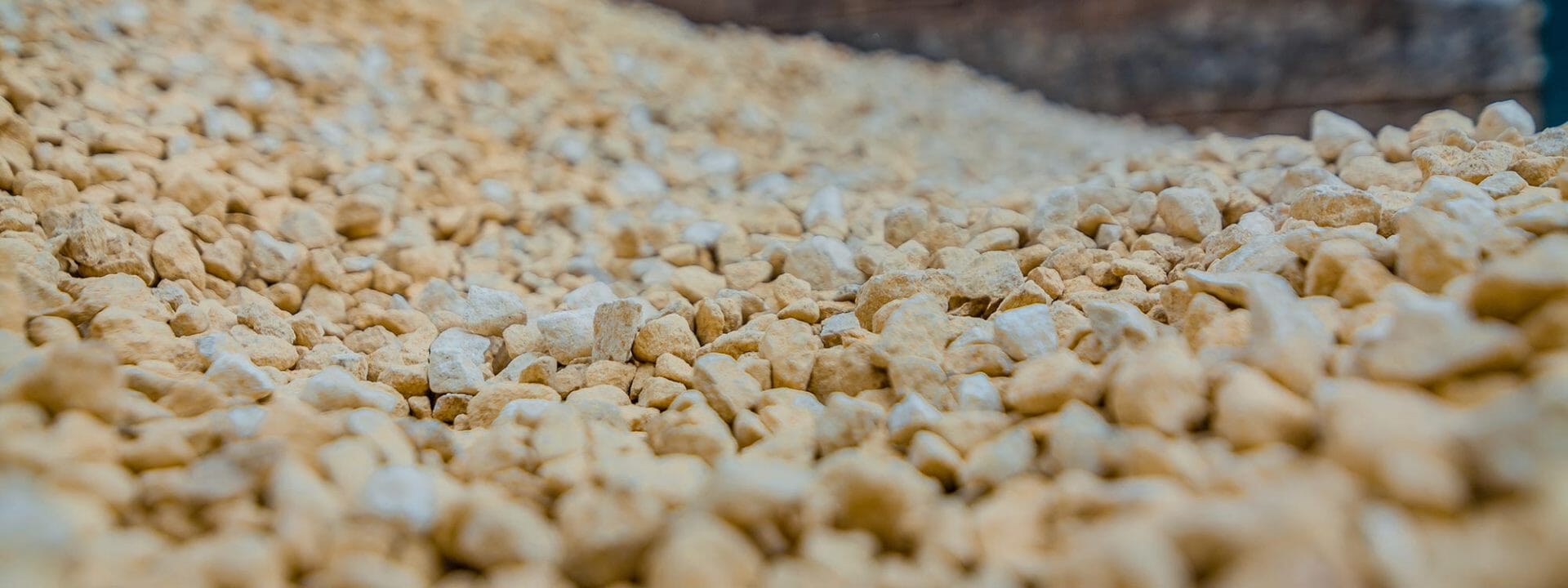
- Decorative Cotswold chippings – a natural gravel that is formed from crushed limestone, often used as a finishing product for landscaping and exterior domestic refurbishment projects.
- Recycled hardcore materials – offers a well-compacted base that provides reassurance for builders when infilling upper layers.
- Recycled concrete aggregates – a combination of reprocessed construction materials such as crushed stone, gravel, and asphalt.
We take great care in the processing and quality control of all our recycled aggregates, ensuring they’re fit for purpose and safe for use in construction. Our aggregate recycling operations are fully licensed and environmentally responsible, so you can rest assured that your building materials are as sustainable as possible.
Visit our aggregate services page to discover more about what we offer and how we can help support your sustainable construction goals.
How your business can participate in Global Recycling Day 2025
Did you know that only 16% of the 2.1 billion metric tonnes of solid waste generated each year is recycled? Global Recycling Day serves as a pivotal reminder of the importance that recycling plays in preserving our planet’s natural resources and combating climate change, marking a key opportunity for businesses to step up their sustainable waste management efforts. Read our top tips below to start implementing simple yet effective recycling strategies within your business.
When is Global Recycling Day?
Global Recycling Day takes place on March 18th each year. Established in 2018 by the Global Recycling Foundation, this day emphasises the need to view waste materials as valuable resources. It promotes the concept of recycling as the ‘Seventh Resource’ alongside the planet’s six primary resources: water, air, coal, oil, natural gas, and minerals. The 2025 Global Recycling Day theme is ‘breaking barriers’, which highlights the importance of stakeholder participation to address the global waste management crisis.
Why should your business get involved in Global Recycling Day?
Businesses are at the forefront of environmental impact, both in terms of resource consumption and waste generation. As stated by Global Recycling Day, “there is no doubt recycling is on the front line in the war to save the future of our planet and humanity. Each year the ‘Seventh Resource’ (recyclables) saves over 700 million tonnes in CO2 emissions and this is projected to increase to 1 billion tons by 2030.”
But aside from the wider sustainability benefits that come with preserving our planet, what advantages can participating in Global Recycling Day bring to your business?
Customers and stakeholders are increasingly favouring businesses that prioritise sustainability, so participating in Global Recycling Day 2025 can enhance your company’s reputation and even increase sales. Involving staff in your recycling initiatives fosters a culture of responsibility and teamwork, making your business a more desirable place to work. And, not to mention, recycling also leads to significant cost savings, helping to improve your bottom line.
Top tips for participating in Global Recycling Day 2025
1) Conduct a waste audit
Begin by conducting a comprehensive waste management audit. This involves assessing the types and quantities of waste your business produces on a daily basis. This audit will identify key areas where your recycling efforts can be improved.
2) Establish comprehensive recycling programmes
Once you’ve completed a waste audit, you can begin to make improvements to your current recycling programmes. Ensure that recycling bins are conveniently located throughout your premises and clearly labelled for materials such as paper, plastics, glass, and metals. You could also consider collaborating with a trusted waste management company, like McCarthy Marland, to manage the collection and processing of your recyclable materials.
3) Educate & involve your employees
It’s no good just placing a few recycling bins around your premises if your employees aren’t on board. Hold regular training sessions to educate your staff on proper recycling practices and the environmental impact of waste. You could even introduce rewards for individuals who demonstrate a strong commitment to recycling initiatives.
4) Participate in community events
Global Recycling Day is all about getting out and about in the community to aid with recycling efforts. Engage your employees in local clean-up activities to help showcase your business’ commitment to environmental stewardship. Or, introduce some friendly competition to make recycling a bit more fun, and challenge other businesses or departments to recycling contests. And don’t miss the opportunity to shout about these events on your company’s social media pages.
5) Partner with other sustainable businesses
Consider partnering with likeminded eco-friendly businesses to strengthen your commitment to a circular economy. Purchase your office supplies and packaging from companies that utilise recycled materials, or explore biodegradable alternatives to further reduce waste.
Improve your business’ recycling efforts with McCarthy Marland
At McCarthy Marland, we understand the challenges that businesses face with regards to managing waste sustainability. We offer a range of tailored commercial and industrial waste management solutions to handle various waste streams, including wheelie bin hire, skip hire, and waste collection. We achieve an average recycling rate of 95% across all four of our recycling centres – so, by partnering with us, you can be confident that we will recover and recycle as much of your waste as possible.
Get in touch today to discover how we can help support your business’ recycling efforts.
Everything you need to know about the new simpler recycling regulations
As of 31st March 2025, England is set to implement a new ‘simpler recycling’ legislation, which marks a significant stride towards improving recycling efforts across the nation. This new framework aims to standardise recycling practices, making it easier for households and businesses to manage their waste in an environmentally friendly manner.
In today’s blog, we explore everything you need to know about the new simpler recycling regulations, and share some practical tips on how your business can prepare for the changes.
Understanding the simpler recycling regulations
The simpler recycling legislation introduces several new guidelines regarding waste separation and collection. The overarching goal is to create a consistent waste management system across England and increase recycling rates.
From 31st March 2025, all businesses and non-domestic premises in England with 10 or more employees are legally required to segregate their waste into the following categories:
- Dry recyclable materials – this includes plastics, metals, glass, paper, and cardboard
- Food waste – all food scraps and leftovers
- Residual (black bin) waste – non-recyclable waste that doesn’t fit into the above categories
However, businesses with less than 10 full-time employees have until 31st March 2027 to comply with these requirements.
Following these changes, businesses must implement internal systems to separate waste at the source. They’ll also be encouraged to partner with licensed waste management companies to ensure that segregated waste streams are collected and processed in compliance with the legislation. Non-compliance with these recycling laws could result in hefty fines and penalties, so it’s vitally important that your business understands and adheres to the new regulations.
You can discover more about the new workplace recycling rules in England via the official government website.
How your business can prepare for the changes
There are a number of steps that your business can take to ensure a smooth transition into the new recycling framework. These include:
Conduct a waste audit
The first step to preparing for the new workplace recycling rules is to assess the types and volumes of waste your business generates. This will inform any necessary adjustments to your current waste management practices and help identify key areas for improvement.
Educate & train your staff
Make sure that all your employees are aware of the new requirements and understand how to properly segregate waste in the workplace. Ensure that you provide clear training sessions to help your employees comply with the legislation.
Partner with a waste management provider
Reach out to a reputable waste management company, like McCarthy Marland, to facilitate waste collection and ensure proper disposal of recyclable materials. This will provide peace of mind that your waste is being managed in a compliant and environmentally friendly manner.
Review & optimise your waste practices
Regularly assess your waste disposal methods and make any necessary adjustments that will aid your recycling efforts. For example, you may decide to introduce more recycling stations throughout the workplace to encourage proper waste segregation among employees.
Choose McCarthy Marland as your commercial waste management partner
Our friendly team at McCarthy Marland are committed to supporting businesses across England throughout the transition to a new ‘simpler recycling’ norm.
We offer a comprehensive range of commercial waste management services that are specifically designed to improve your recycling and composting rates, including the provision of recycling bins and regular collection schedules tailored to your needs. We are always on hand to provide expert advice and guidance on which waste management solutions are right for your business, so you can segregate your waste with confidence.
Need support with your business’ waste management practices? Whether you’re completely new to recycling or a seasoned expert, we will support you every step of the way to simpler recycling compliance. Get in touch today to begin your journey toward recycling excellence.
How to choose the right wheelie bins for your business needs
UK businesses generate huge amounts of waste each year. According to official government statistics, businesses in England produced around 33.6 million tonnes of commercial and industrial waste in 2022. To streamline your operations and manage your waste more efficiently, it’s vital that you choose the right wheelie bins for your business needs. But how can you determine which wheeled bins are best for your organisation?
In this blog, we delve into the factors to consider when selecting the correct commercial wheelie bins for your business.
Waste volume
When choosing the correct wheelie bin for your business, the first thing to consider is the volume of waste that your business typically generates, as well as how much waste you expect to produce in the future. Conducting a waste audit enables you to accurately measure your organisation’s waste streams and make informed decisions about which business wheelie bin you need.
Size selection
Once you’ve identified how much waste your business produces, you can then choose your commercial wheelie bin size. You should always match the bin size to your waste output – for example, smaller bins are better for low-volume establishments, whereas larger bins are more suitable for large quantities of waste.
At McCarthy Marland, we offer the following wheeled bin sizes:
- 240 litre wheelie bins – ideal for small to medium-sized enterprises that produce a moderate amount of waste, these bins house between 3-5 bags of waste
- 360 litre wheelie bins – suitable for medium-sized businesses that produce a considerable amount of waste, these bins accommodate 6-8 bags of waste
- 660 litre wheelie bins – ideal for large businesses that generate significant waste, these bins hold between 8-10 bags of waste
- 1100 litre wheelie bins – perfect for large manufacturing or industrial sites that produce huge amounts of waste, these bins handle 15-18 bags of waste
Read our blog post on ‘how to choose the perfect wheelie bin size’ for further information.
Waste types
As well as the volume, you should also measure the types of waste that your business generates. Take the time to determine if you produce mainly paper and cardboard waste, or whether you tend to throw away masses of glass bottles, for example. It’s important to remember that hazardous waste is not suitable for disposal in wheeled bins and should be sent to a specialist facility.
We offer the following types of bins for businesses:
- General waste bins – for non-recyclable waste
- Dry mixed recycling & recovery bins – for all recoverable and recyclable waste, apart from food or glass
- Food waste recycling bins
- Glass recycling bins
Frequency of collections
Another key consideration when choosing the correct wheelie bins for your business is how often your waste will be collected. This can help inform which commercial wheelie bin size you need – for example, if your waste will be collected multiple times per week, you may not need the largest size. You should adhere to a regular waste collection schedule throughout the year, and arrange additional collections during peak periods if needed.
Bin placement
You’ll also need to think about where you will position your bins around the workplace. Make sure you position your business wheelie bins in locations that are easy to access, and ensure that there is sufficient clearance around the bins to manoeuvre them. This will make the waste collection process much smoother.
Lockable lids
Finally, you might want to consider choosing business wheelie bins with lockable lids. These can help deter thieves and pests, as well as preventing unpleasant odours. McCarthy Marland’s commercial bins all come with lockable lids for added security, so you can rest assured that your waste is stored securely. Once your wheelie bins are on site, encourage your staff members to close the lids securely after disposing of any waste.
Choose McCarthy Marland for all your business wheelie bin needs
As one of the leading waste management companies in the South of England, we offer a wide selection of business wheelie bins that are specifically tailored to your requirements. As well as supplying the bins, we will also collect all your general and recyclable waste at a time that suits you, ensuring minimal disruption to your daily operations.
Contact us today to discuss your business wheelie bin needs.