



What your business needs to know about simpler recycling in 2026
As we move through 2026, you can’t afford to put the UK’s simpler recycling reforms on the back burner. Launched last year to create a consistent approach to recycling in the UK, the government’s simpler recycling regulations introduced some key changes that impact how your organisation manages its waste on a daily basis.
We’re here to help you make sense of what’s required when it comes to simpler recycling in 2026, and how to get it right without disrupting your operations.
What are the simpler recycling regulations?
The simpler recycling initiative was introduced to tackle confusion around recycling rules and improve recycling rates across England. Businesses are required to segregate key recyclable materials rather than mixing everything together and have separate waste streams for:
- Dry mixed recyclables, including paper, card, plastics, metals, and glass
- Food waste
- Residual (non-recyclable) waste
The overall aim of simpler recycling is to reduce the amount of waste sent to landfill, improve the quality of recycled materials, and support a more circular economy.
Key deadlines your business needs to be aware of
Businesses, schools, hospitals, and other non-domestic premises with 10 or more employees have been required to comply with the legislation since 31st March 2025. Now we’re firmly in 2026, there’s no room for error for establishments that fall under this criteria.
Businesses with less than 10 employees have a later deadline of 31st March 2027 to comply with the regulations. However, we highly recommend preparing early to avoid disruption to your operations.
How simpler recycling affects your business
The UK’s simpler regulation reforms might require your business to make some major operational changes. You’ll need to have the appropriate size and type of containers on site, provide clear signage on which materials go where, and invest in a reliable waste collection service. You’ll also need to provide evidence that you’re separating waste correctly if your local authority or an external regulator requests to see this.
If you fail to meet these business recycling requirements, you could be faced with enforcement action, including warnings or fines. You may even be required to change your waste arrangements at short notice, which could seriously disrupt your operations. Beyond the legal implications, non-compliance with the simpler recycling regulations could also damage your reputation with customers and stakeholders who are concerned about sustainability.
How to ensure simpler recycling compliance in 2026
1) Set up separate collections for food and dry waste
The first step to complying with the simpler recycling regulations is to carry out a waste audit. This involves reviewing the quantity and type of waste your business produces – for example, do you generate food waste on site? And how much paper and packaging are you dealing with each week? This will help you determine which waste containers you require on site, and how frequently your waste needs to be collected.
2) Train your staff on their waste responsibilities
Even the most well-designed recycling system will fall short if your staff aren’t on board. Invest time in staff training and ensure that your employees understand their responsibilities when it comes to separating waste streams. We recommend having clearly labelled waste containers on site, supported by clear signage on what goes where. This will reduce confusion and ensure that all materials are placed in the correct containers.
3) Regularly review your waste setup
The waste setup that works for you today might not necessarily work tomorrow. That’s why it’s important to regularly review your waste arrangements and make any adjustments as required. Ongoing reviews will help you spot any contamination issues early, upgrade/downgrade your bin sizes, or update your collection frequencies as your business’ waste needs change.
4) Choose the right waste management partner
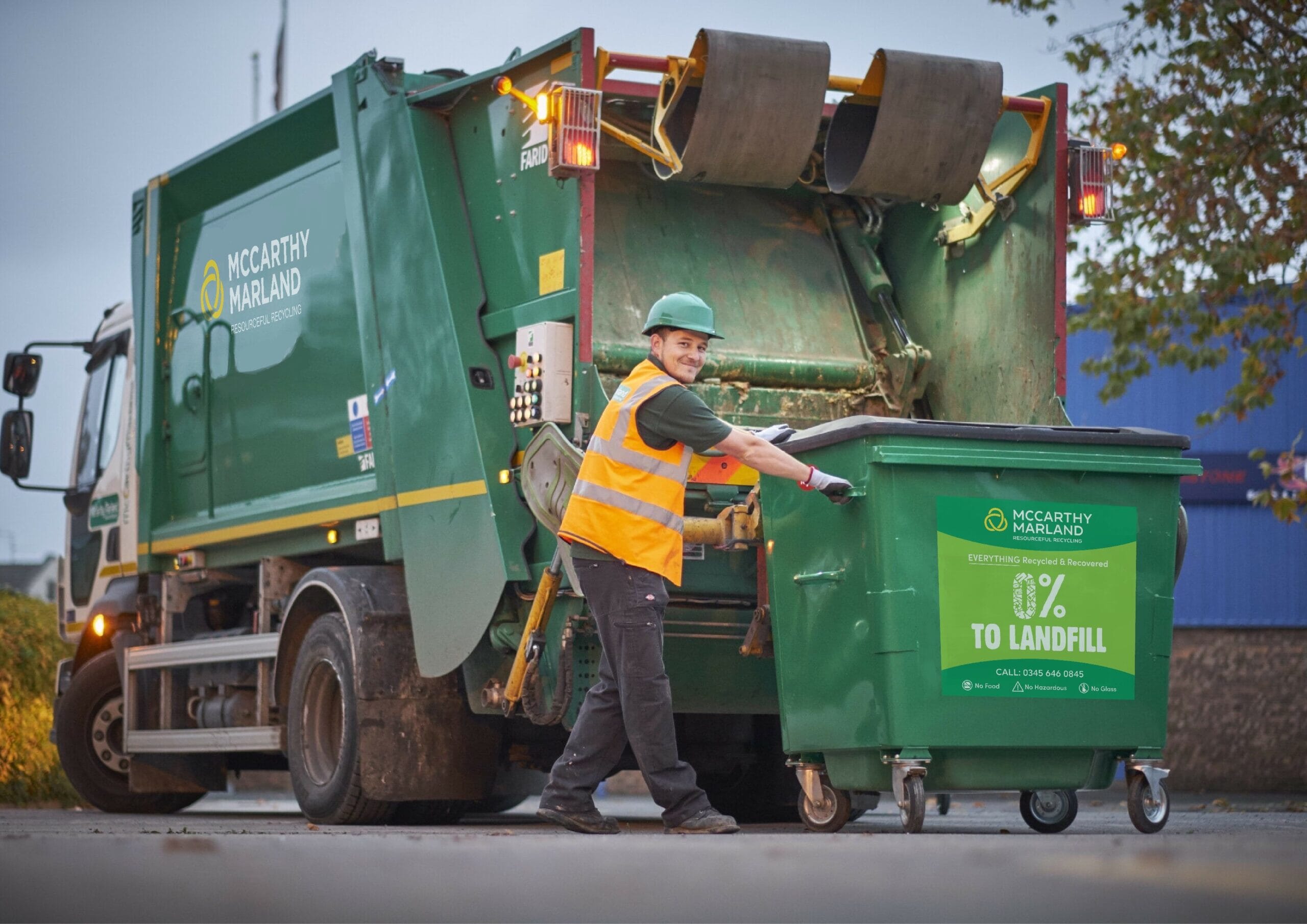
Your waste contractor will play a key role in helping you comply with the simpler recycling regulations. Look for a provider that understands the finer details of the legislation and can offer tailored solutions to suit your business’ needs – including the provision of wheelie bins and flexible collections that work around your schedule.
McCarthy Marland: your simpler recycling partner for 2026
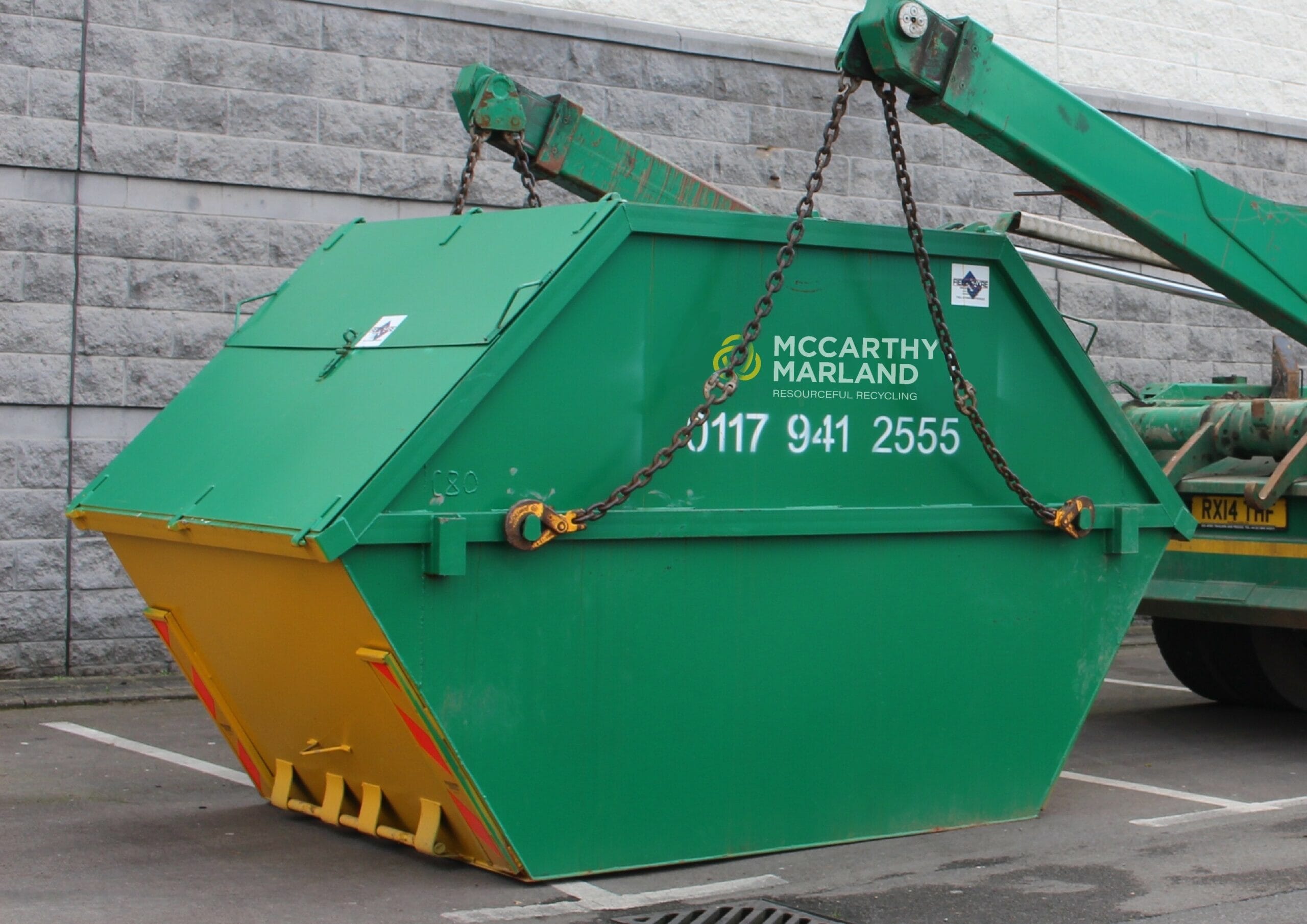
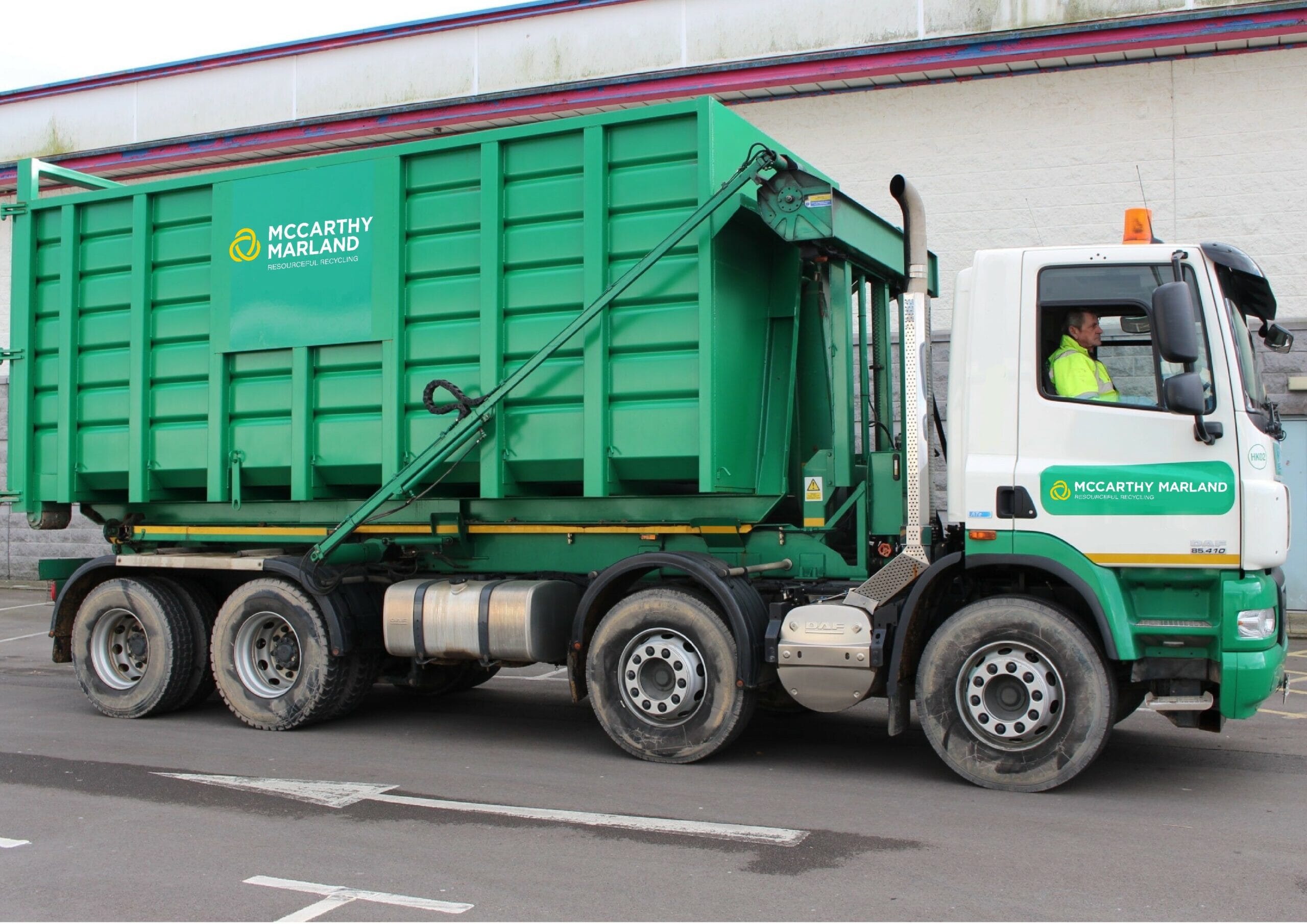
At McCarthy Marland, we’re proud to help businesses across the South-West to effectively segregate their waste and boost their recycling rates. We offer a wide range of commercial waste management services, including wheeled bins, skip hire, and RoRo skip hire, supported by flexible waste collections that fit around your schedule.
Not sure whether your current setup is compliant? Our team can help review your current setup, recommend improvements, and ensure you’re meeting the requirements for simpler recycling in 2026. Get in touch to arrange your free waste audit.
FAQs
Is simpler recycling mandatory for businesses in 2026?
Yes, simpler recycling is already mandatory for businesses with 10 or more employees and fully applies throughout 2026. These organisations are expected to have compliant waste separation and collections in place as part of their daily operations.
Do all businesses need a food waste collection under simpler recycling?
If your business produces food waste, you must arrange a separate food waste collection under the simpler recycling rules. This applies to all businesses in catering, hospitality, and any other workplace where food preparation or consumption takes place.
What happens if my business doesn’t comply with simpler recycling?
Non-compliance with the simpler recycling regulations can result in warnings, fines, or enforcement action from regulators. Over time, it can also impact your reputation with eco-conscious customers and stakeholders.
Do the simpler recycling rules apply across the whole of the UK?
Simpler recycling currently applies in England as part of the wider UK recycling reforms. Scotland, Wales, and Northern Ireland all have their own waste and recycling regulations.