



A commercial guide to dry mixed recycling
Dry mixed recycling (often shortened to DMR) is one of the simplest and most effective ways to recycle your business’ everyday waste. You can place a range of recyclable materials, including paper, cardboard, plastics, and cans into a single bin, without needing to sort them on site – which is particularly useful if you’re managing high volumes of multiple waste types.
We’ve put together this handy commercial guide to dry mixed recycling, covering everything from what DMR actually is to how the process works behind the scenes, so you can determine whether these recycling bins could benefit your business.
What is dry mixed recycling?
Dry mixed recycling is a recycling method where several recyclable materials are collected together in one container and later separated at a specialist facility. All materials within a DMR bin must be clean and dry to be recycled effectively; food residue, liquids, and non-recyclable items can contaminate the load and reduce how much material can be recycled.
What can go in a dry mixed recycling bin?
Dry mixed recycling bins are designed for everyday recyclable materials. As a general rule of thumb, all items should be empty, clean, and dry before being placed into a DMR bin.
The typical materials accepted in DMR bins include:
- Paper, such as newspapers, magazines, office paper, and envelopes
- Cardboard, including boxes, packaging, and cardboard sleeves
- Plastic bottles, tubs, and containers
- Metal packaging, such as aluminium cans, steel food tins, and foil trays
What can’t go in a dry mixed recycling bin?
However, there are some items that can’t be processed through DMR recycling so should be kept out of the bins to avoid contamination. These include:
- Food waste or food-soiled packaging
- Liquids of any kind
- Glass bottles and jars
- Plastic film, carrier bags, and soft plastics
- Coffee cups and crisp packets
- Hazardous waste, including batteries, chemicals, and paint tins
- Sanitary waste, nappies, and tissues
- Wood, textiles, ceramics, and polystyrene
If you place one of these items into your DMR bin, this could lower the quality of the recovered materials – and in some cases, your entire load may be rejected.
How dry mixed recycling is collected and sorted
1) Collection
Once your dry mixed recycling bin is full, it is then collected from your premises on a scheduled basis that suits your operational needs and waste volumes.
2) Transportation
The collected materials are then transported to a specialist Materials Recovery Facility (MRF). This usually only requires one collection as all the different recyclables are bundled together, helping to reduce emissions from multiple collection vehicles.
3) Sorting
Your dry mixed recycling materials are sorted at the MRF using a combination of automated sorting technology and manual checks. Items are sorted by their material type i.e. paper, metal, plastics.
4) Reprocessing
Once the materials have been separated, they are baled and sent for reprocessing, where they will be turned into new raw materials for manufacturing. Modern waste processing facilities are designed to recover as much recyclable material as possible while minimising waste.
The benefits of dry mixed recycling for your business
Stay compliant with waste regulations
Using a commercial dry mixed recycling service helps you effectively separate recyclable materials from general waste and ensure they’re sent for recovery, which reduces the risk of non-compliance and avoids any potential issues during audits or inspections.
Keep your waste disposal costs down
By diverting recyclable materials away from landfill, dry mixed recycling helps to reduce the amount of general waste that your business produces. This can help you manage your disposal costs more effectively and avoid the ever-increasing landfill taxes.
Improve your site’s recycling rates
One of the major benefits of dry mixed recycling is that you don’t need to worry about separating materials on site. Everything is placed into one clearly labelled bin, which makes it much easier for you and your team to recycle effectively – in turn improving your site’s recycling rates.
Get dry mixed recycling right with McCarthy Marland
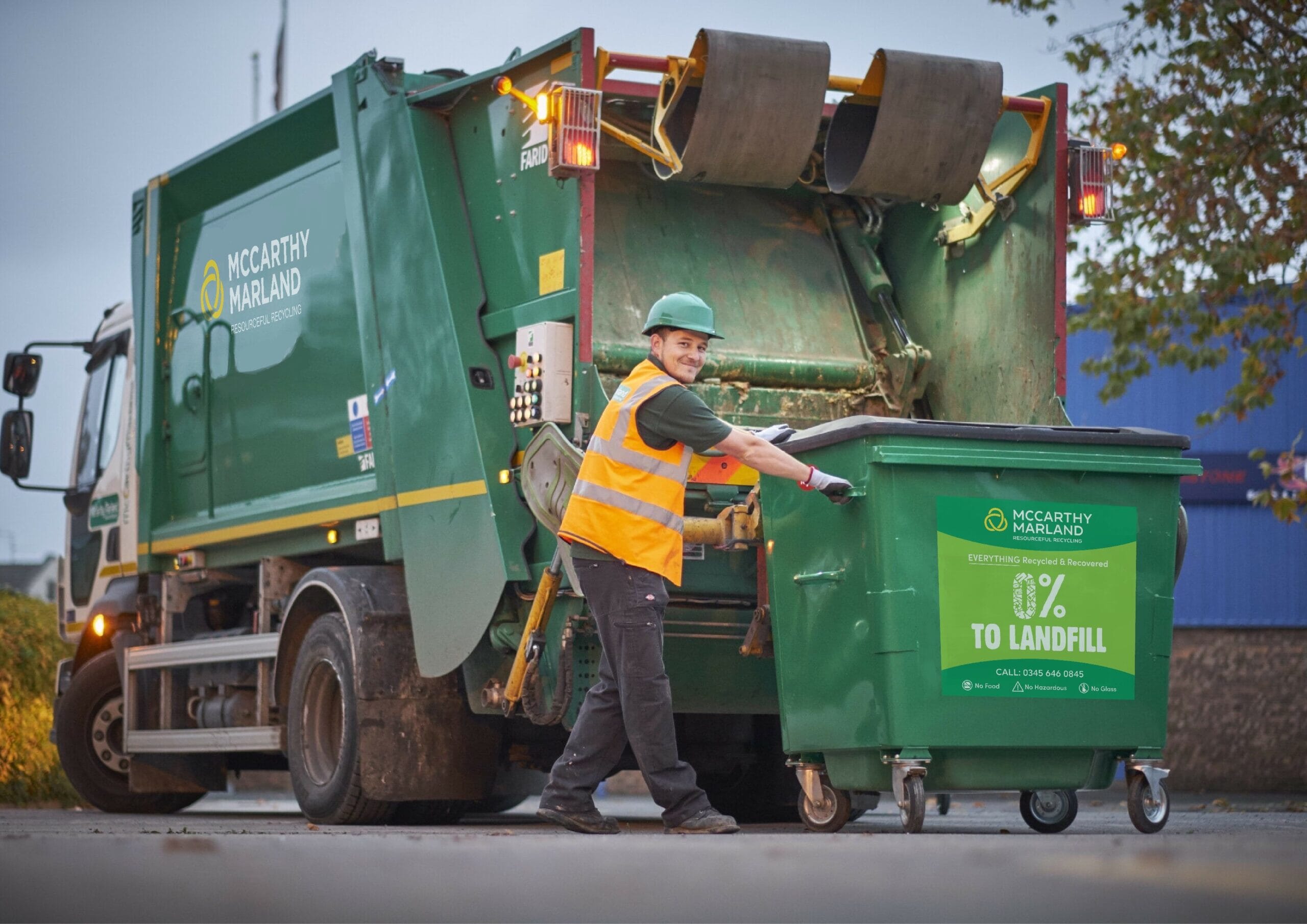
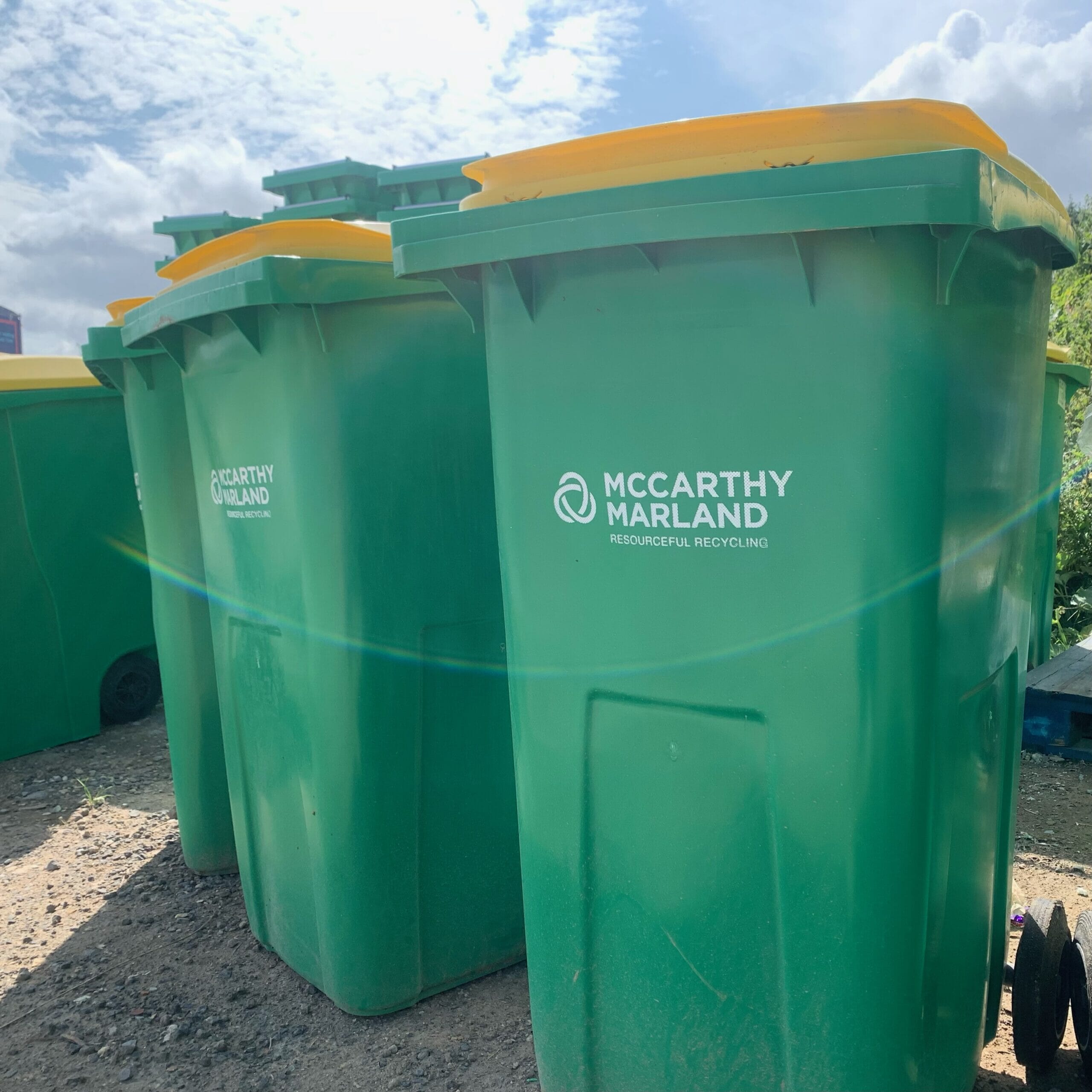
At McCarthy Marland, we provide a range of commercial dry mixed recycling and recovery wheeled bins to businesses across the South West, from 240L all the way up to 1100L. You can bundle all recoverable and recyclable waste, excluding food and glass, into one bulk wheelie bin container, and we’ll collect it from your premises on a scheduled basis that suits you.
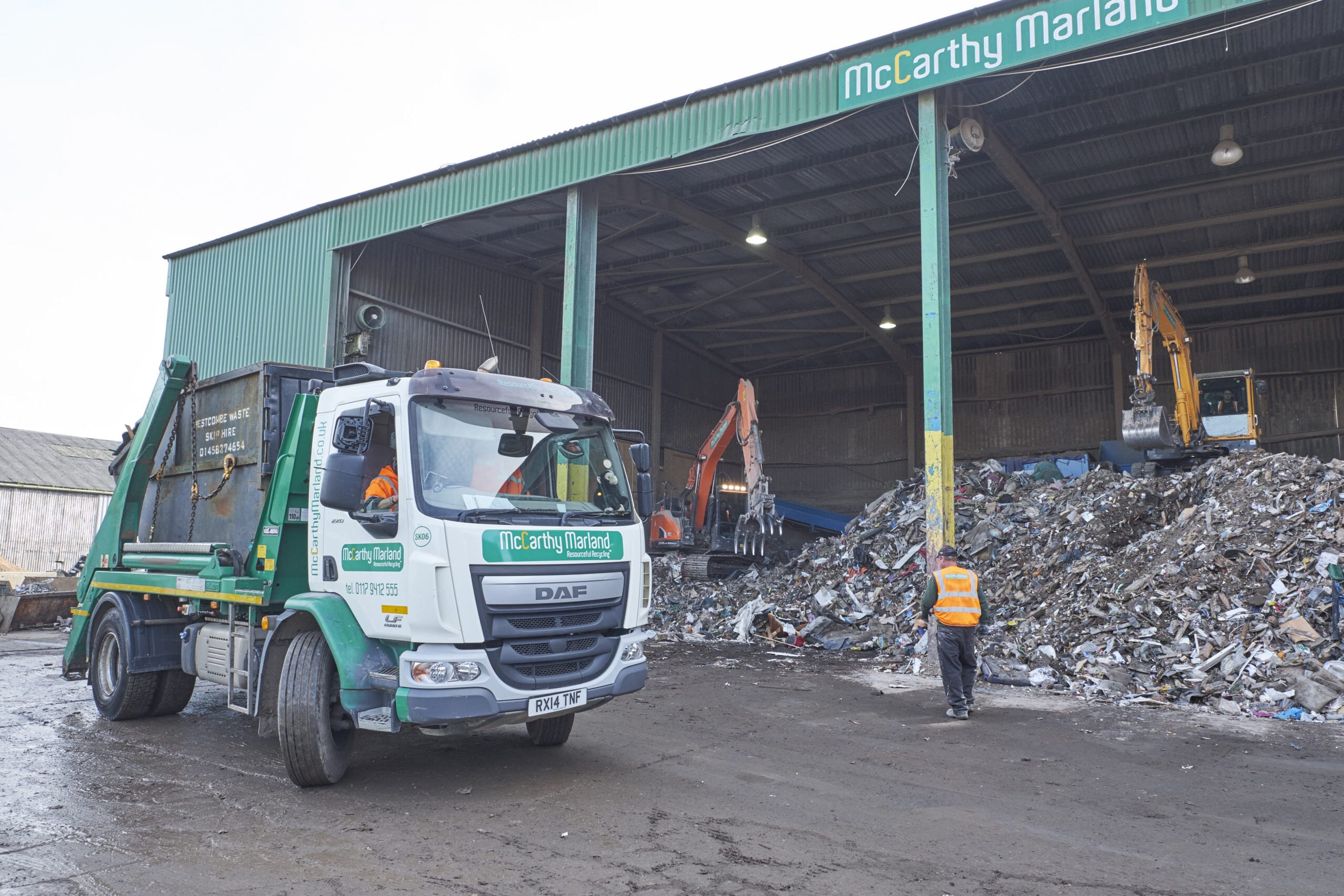
Once we’ve collected your waste from site, we’ll then bring it back to one of our recycling centres to extract all suitable recyclable materials, with the remaining residual material processed into Refuse Derived Fuel (RDF). We’re exceptionally proud to achieve an average recycling rate of 95% across all our facilities; so when you work with us, you can rest assured that your waste won’t end up in landfill.
Get in touch to discover how our dry mixed recycling services could benefit your business.
FAQs
Do I need to rinse containers before putting them in a DMR bin?
Yes, your containers should be empty and reasonably clean before putting them in a DMR bin. This helps to prevent contamination, as food residue and liquids can reduce the quality of recyclable materials and lead to rejected loads.
Can plastic film go in dry mixed recycling?
No, soft plastics and plastic film should be kept out of dry mixed recycling bins unless a dedicated collection is provided, as these materials can tangle sorting equipment at recycling facilities.
Is dry mixed recycling suitable for small businesses?
Yes, dry mixed recycling works well for businesses of all sizes, from small offices to large commercial and industrial sites. You can scale your collections up or down as your waste volumes change.