



What are the asbestos risks in construction projects?
Asbestos is one of the most serious hidden hazards found on UK construction sites. In fact, according to research commissioned by the HSE, asbestos was responsible for the death of over 2,500 construction workers in 2005 – which highlights why it’s so important for you to identify asbestos risks in your construction project and put the right controls in place to keep your workers safe on-site.
In this guide, we explain everything you need to know about asbestos in construction, including where asbestos is commonly found and what happens when it’s disturbed. We also share some practical advice to help you manage asbestos exposure risks on your site.
Where asbestos is found in construction work
Although its use was banned in the UK in 1999, any building that was constructed or refurbished before this year may contain asbestos.
Asbestos is still commonly found in:
- Insulation boards in walls, ceilings, and service risers
- Pipe lagging and boiler insulation
- Sprayed coatings on structural steel or concrete
- Cement products such as roof sheets, wall panels, and flues
- Floor tiles, adhesives, and textured coatings
The highest risks in construction projects typically arise when work involves opening up the fabric of a building. This includes:
- Refurbishment and demolition works
- Drilling into walls, ceilings, or floors
- Removing old insulation or fireproofing
- Working on plant, ducts, or pipework
The condition, location, and type of construction materials used all influence the level of risk. Some ACMs (asbestos-containing materials) are relatively low risk if they’re left undisturbed, but many can release fibres very easily when damaged.
What actually happens when asbestos is disturbed
When asbestos-containing materials are cut, drilled, broken, or removed without proper controls in place, the microscopic fibres can be released into the air. These fibres are invisible and easily inhaled, where they can lodge deep in the lungs. Over time, this exposure can lead to serious and often fatal illnesses including asbestosis, lung cancer, and mesothelioma.
The most dangerous thing about asbestos exposure is that the symptoms of these illnesses can take decades to develop. This means that workers may not even realise they’ve been harmed until long after the exposure has occurred. Even short-term or low-level exposure to asbestos can carry long-term health risks, which is why it’s vital to prevent fibre release in the first place.
How to manage asbestos exposure risks on your site
The Control of Asbestos Regulations 2012 set our clear responsibilities when it comes to managing asbestos exposure risks. If you fail to comply with these regulations, this could have a negative impact on the health of your workforce, the compliance of your project, and your overall costs.
If asbestos is discovered on your site, work will most likely grind to a halt while surveys are being carried out and removal is arranged. This could cause your project to overrun and increase your costs, and could even lead to enforcement action from the Health and Safety Executive (HSE).
Here’s how you can avoid these consequences:
1) Carry out asbestos surveys before work starts
The Control of Asbestos Regulations 2012 states that you must carry out an asbestos survey before any refurbishment or demolition work takes place. These types of surveys are extremely intrusive and designed to locate all ACMs that could be disturbed by the work.
2) Create an asbestos management plan
Once the survey has been completed, you must use the findings to create an asbestos management plan. Begin by completing a risk assessment to identify which activities could disturb asbestos and who may be exposed, developing method statements that set out how the work will be carried out safely, and planning work areas to confirm which locations can be accessed, avoided, or isolated.
The findings will also determine where you may need to hire licensed asbestos contractors for removal, and how the programme of works should be sequenced, including planned breaks for asbestos removal, clearance, or air testing to prevent accidental exposure.
3) Organise removal if suspected ACMs are found
Asbestos waste is classed as hazardous waste and must be handled, transported, and disposed of in line with strict regulations. If asbestos is uncovered on your site, you must:
- Stop all work immediately
- Isolate the area and prevent access
- Do not disturb the material
- Arrange an assessment by a competent asbestos surveyor
- Work with an asbestos waste disposal company to safely remove the material
All asbestos waste must be double-bagged, clearly labelled, and placed into suitable secure containers or enclosed skips. These movements must be documented using hazardous waste consignment notes, and disposal must take place at a licensed facility. You should only resume work once the asbestos has been safely removed from your site.
How McCarthy Marland can help you manage asbestos risks with confidence
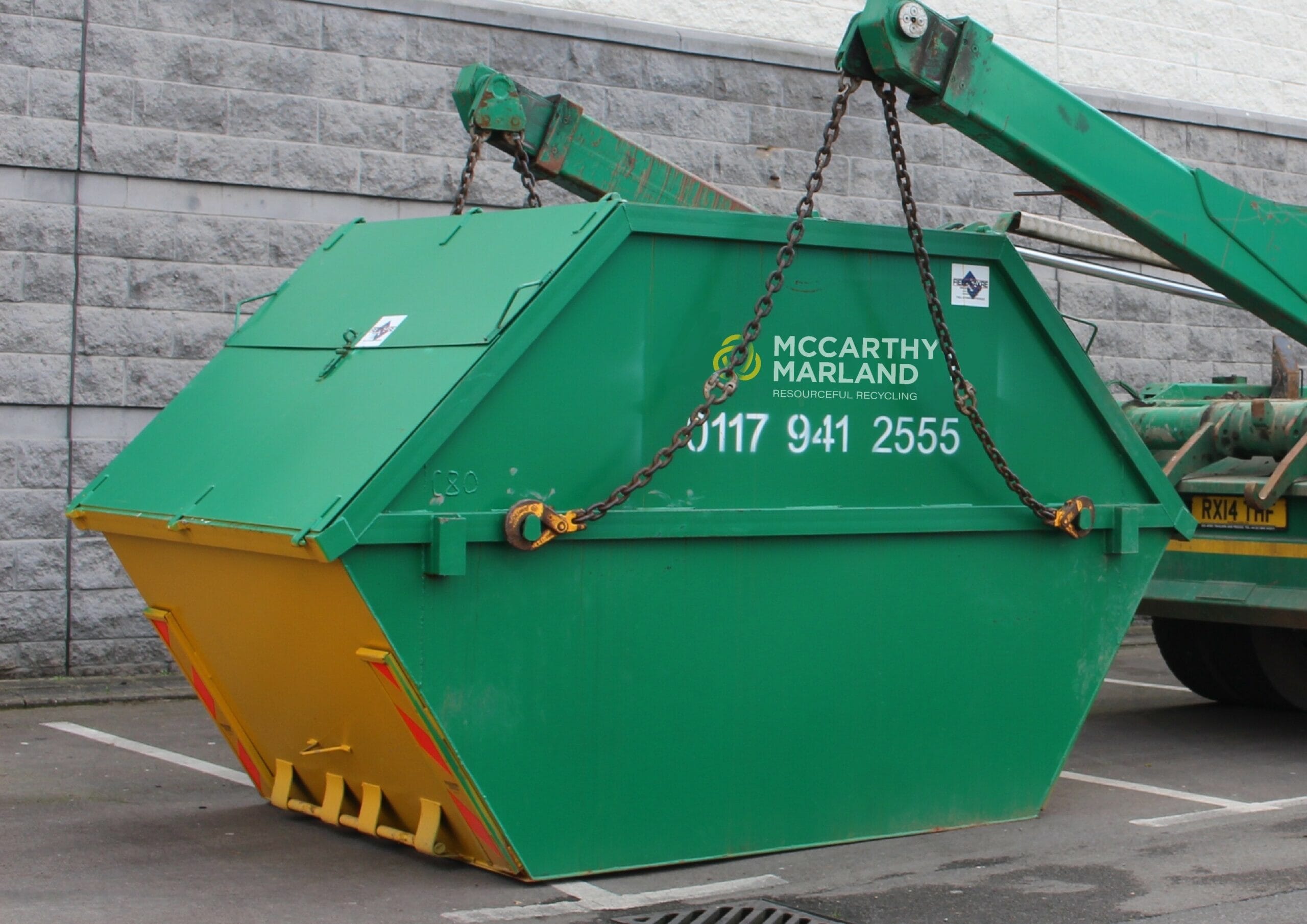
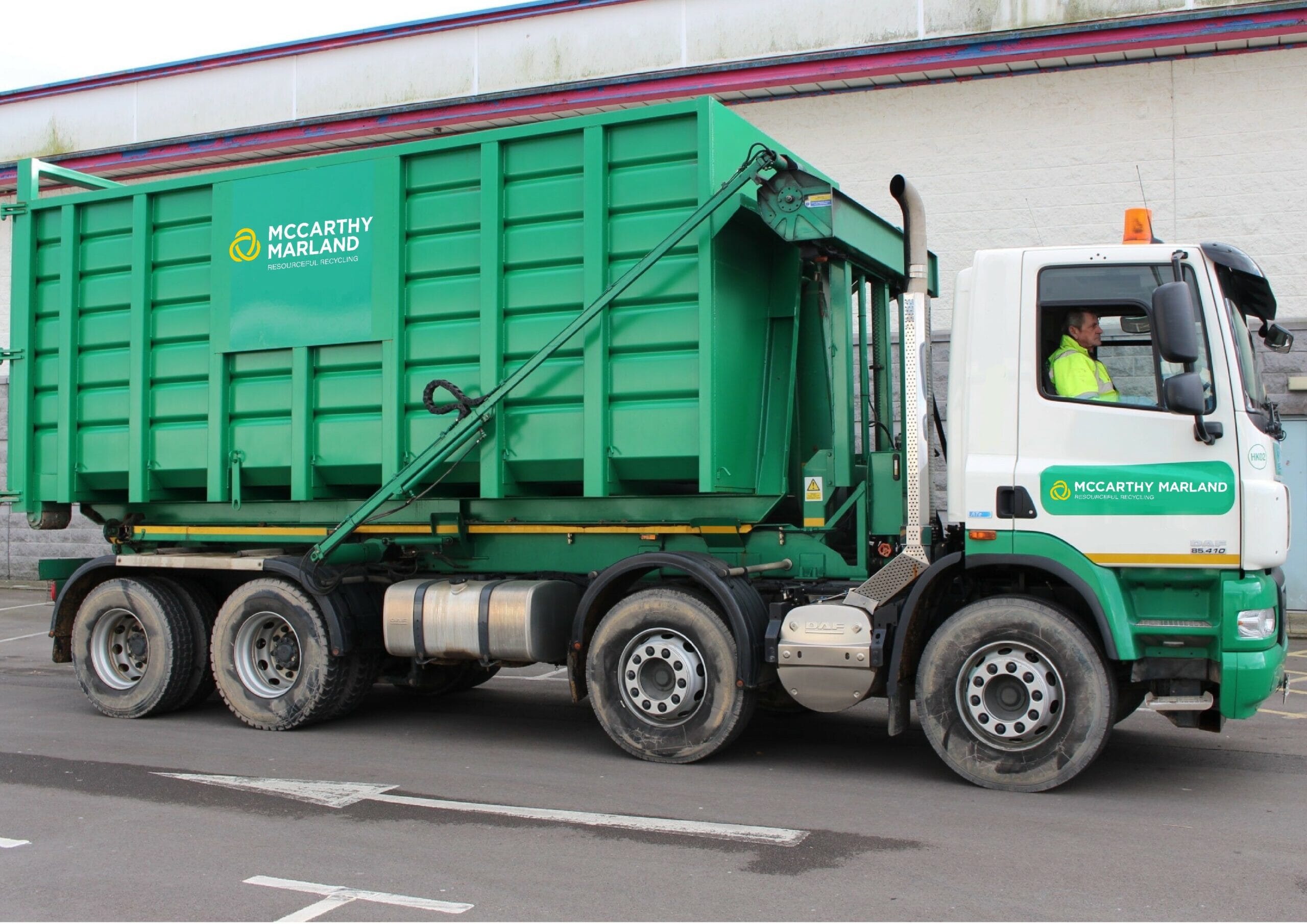
Our expert asbestos waste specialists at McCarthy Marland have been collecting and disposing of asbestos waste and asbestos roof sheets for over 10 years, including bonded asbestos roofing sheets and fibrous asbestos cement. We collect asbestos waste using a variety of compliant asbestos skips and roll-on roll-off containers, before transporting it to a fully licensed asbestos disposal facility that is regulated by the Environment Agency and managed in accordance with stringent hazardous waste regulations.
Get in touch to discover how we can help with your asbestos waste disposal.
FAQs
Do I need an asbestos survey before refurbishment?
Yes, it’s a legal requirement to carry out an asbestos survey before any refurbishment or demolition work takes place – even for small projects.
What should I do if I uncover suspected asbestos on site?
If you uncover suspected asbestos on site, you must stop work immediately, isolate the area, and arrange for a competent surveyor to assess the material.
How should asbestos waste be packaged and disposed of?
Asbestos waste must be double-bagged, clearly labelled, and disposed of through licensed asbestos waste disposal services using the correct paperwork.
5 Questions to ask your Asbestos Removal Company
Asbestos was often used in construction up until the late 1990s. Before we knew of its risks, it was regularly used in buildings, roofs and flooring for insulation purposes. Today, asbestos is banned in the UK, but buildings constructed before 2000 may still have lingering asbestos throughout.
In the 21st century, asbestos is most likely to rear its head when it is disturbed in older buildings. There is also a risk that workers who have been exposed to asbestos can carry the fibres on their clothing which others could breathe in.
There were over 5,000 asbestos-related disease deaths in 2020 alone, including lung cancer, asbestosis and mesothelioma. With plenty of older homes still containing asbestos-related products that put us at risk of deadly diseases, it is important to know how to remove such dangerous materials safely.
An asbestos removal company can help, and there are many questions to keep in mind to get the best service and safest outcomes.
What are the main dangers of asbestos removal?
If you need asbestos removed from your home or building, you might be concerned about the health risks. Exposure to such fibres can lead to dangerous diseases – and maybe even death. The improper removal of asbestos can send microscopic fibres into the air, causing anyone who inhales them to become incredibly ill. The body simply cannot break down the tiny microfibres due to the extreme longevity of asbestos.
The removal of asbestos can be so dangerous that The Environmental Protection Agency advises to not even touch damaged asbestos-containing products without the help of a specialist removal company. Professionals follow specific processes and abide by the law to safely remove or seal asbestos fibres.
Does every asbestos fibre need to be removed?
Despite its dangers, not all asbestos fibres need to be removed. The EPA states that undisturbed asbestos-containing materials are not as likely to cause a health threat. In some cases where asbestos fibres are in good condition, it’s best to leave them alone.
Materials that are noticeably crumbling, on the other hand, should be removed as soon as possible. This kind of asbestos poses a risk because it may break down even more and release further fibres into the air if removal is attempted.
Can I still live at home during asbestos removal?
It is advised that you do not stay in your home during the removal process, but that can depend on the removal company you are working with. Some may approve your stay, depending on the amount of asbestos that is lingering. But, regardless of the severity, it’s important to consider staying away completely until the asbestos is gone entirely.
Can I remove the asbestos myself?
It’s not impossible to remove asbestos by yourself if you live alone, so it is recommended that you leave it to the professionals. There are currently no laws in place that prevent you from a DIY removal, but without proper training, you pose a threat of inhaling seriously deadly fibres. Overall, the risk of exposure is simply too high.
How long does the removal process take?
Depending on the case, an asbestos removal job will vary in time. This could be anything from a matter of days to several months – to even years if it is a serious health concern. A professional company will provide an idea of the length of a case once they have carried out an inspection.
The important thing to remember is that no matter how long it takes, it’s essential that the time invested will ensure your home is safe and free of asbestos. Corporate buildings may take an efficient planning process to ensure the business can operate at a safer location during the removal process.
All removal companies are legally required to give The Health and Safety Executive 14 days notice before the removal.
How much does asbestos removal cost?
Asbestos removal can cost anywhere from around £50 for an initial evaluation to well into the thousands, depending on the severity of the situation. Smaller amounts can be removed quickly and easily, and at a lower cost. Bigger projects require more materials and time, where costs will quickly add up. The best step to take is to get in touch with an asbestos removal company and request a quote.
Asbestos disposal at McCarthy
As a complete waste management provider, McCarthy is a fully licensed asbestos disposal site for cement-bonded asbestos waste. This means that, if required, we can come and identify and collect any unwanted hazardous asbestos or receive it directly at our transfer station in Wantage, by advanced agreement.
We also offer a range of skips, roll-on/roll-off and a hazardous ‘Wait & Load’ service in our 7.5 tonnes caged tipper to aid the safe disposal of asbestos waste. It’s important to note that all of these services are fully dependent upon the provision of premises codes and consignment notes.
Dispose of any unwanted and hazardous asbestos
If you are looking to dispose of any unwanted and hazardous asbestos, you must contact us first, so that we can prepare for the safe collection or delivery of any asbestos.
Toxic Waste! Is it a real problem – or just in films?
Toxic Waste! Is it a real problem – or just in films?
Almost everyone has come across a toxic waste, ‘survival of the fittest’ style blockbuster movie, the ones that are sometimes so unrealistic that you could never believe it would occur. Yet, equally, make you wonder just how much we truly know about hazardous waste disposal and what could happen next.
Memorable movie moments that made us think twice
The Simpsons are well-known for their ‘prediction’ conspiracies. Radioactive waste is regularly shown around Springfield, and the unappealing vibrant green liquid is often portrayed in leaking barrels marked with the Radioactive symbol.
In line with the characteristics of ‘Mr Burns’, it comes as no surprise that he is committing malfeasance crimes by wrongful disposals. There has been plenty of toxic waste focused storylines in line with this, including the terribly polluted river which caused a new breed of fish to mutate.
Mutant, the 1984 eco-horror is about two brothers who discover that the residents of a small southern town are becoming infected by a form of toxic waste, turning them into blood-ravenous zombies. Can you imagine the fear? The anxiety of the unknown?
It’s not just in the movies…
There is some truth to what we are unsure of. In the summer of 1991, Middletown High School, 70 miles north of Manhattan, was given a handful of video cameras. The expectation was to train Fred Iseeks, a popular English teacher’s students in film-making and media production, using local subjects as a starting point. What was supposed to be a casual documentary about local life, somehow turned into an investigative journalism unit.
The project came to a head a whopping six years later in 1997, students passing through Isseks’ high school class would film, edit, and release a feature-length documentary that would eventually uncover and expose a generation’s worth of illegal, mob-connected dumping of toxic materials in their part of New York state. The documentary picked up a huge political stem and is a prime example of how a blockbuster movie would begin.
What is toxic waste?
Toxic waste is classed as a chemical waste material that can cause death or dangerous injuries. Waste is considered toxic if it is poisonous, explosive, mutagenic, radioactive, teratogenic (birth defects) or even carcinogenic (causing cancer). Poisoning occurs when toxic waste is ingested, inhaled, or absorbed by the skin.
What waste is considered ‘toxic’?
From what might be the seemingly less invasive kind of toxic waste in everyday life, such as pesticides, paint, car oil and even old batteries, you will find that they are just as reactive and corrosive as the more fear-mongering kind you see in films today.
Waste is classed as ‘hazardous’ under environmental legislation when it contains properties that might cause harm to humans or the environment. This does not always mean that an instant risk to human health is going to occur, but some toxic waste can cause terrible consequences.
Is your waste hazardous?
Examples include:
- Batteries
- Asbestos
- Pesticides
- Chemicals, such as brake fluid or print toner
- Home electronics such as fridges or freezers
- Car oil
Common hazard waste disposal
The removal of toxic waste is different in each circumstance. With common hazardous waste and items that are difficult to dispose of, there is a more advanced approach necessary.
Hazardous waste cannot be neglected or sent to landfill like normal waste. It must go through an efficient process and procedures to ensure that it will not have the ability to cause damage or serious harm to humans, animals and to our environment.
Waste disposal – leave it to the experts
It is important to know that you should not dispose of your own hazardous waste unless you are qualified to do so and have the necessary on-site facilities. Having an understanding of what is hazardous and what is ordinary waste is key to staying safe.
Toxic waste is only permitted to be disposed of at authorised sites. Specialists in waste management, like McCarthy, can transport hazardous waste to the correct facilities for processing.
Going above and beyond – recycling hazardous waste
Thankfully, despite the fear of toxic waste, it is perfectly achievable to recycle many toxic materials, which, in turn, reduces the amount of hazardous waste ending up in landfills. Many recycling facilities will accept certain types of hazardous waste, so it is worth doing your research.
Toxic waste disposal can be challenging when you have to consider all safety precautions. However, you must remember that no matter how tough it can seem to comply, working with these procedures will ensure that humans and the environment can stay safe and unharmed. It doesn’t have to be difficult, toxic waste is everywhere, but with the support from McCarthy, our professional services can help keep you protected.
At McCarthy, we offer comprehensive hazardous waste and technical solutions that keep you compliant with legislation and deliver innovative disposal solutions, competitive prices and excellent service.
Burning Waste? Don’t Make These Mistakes
Burning rubbish might seem like a quick, easy way to get rid of waste. But, as with most things, it’s not quite that simple. Burning the wrong kind of waste can be damaging to your health, the environment – and it could land you fines.
What Household Waste is Safe to Burn?
✅ Solid wood items
✅ Timber
✅ Dry leaves
Solid wood, dry leaves and timber are all safe to burn. MDF, chipboard and composite particle boards that behave and look like wood should never be burned, and neither should any furniture made from those materials. That’s because the bonding agents used to glue all the particles or layers together becomes a toxic vapour when burned, which can severely impact health if inhaled.
Paper’s okay to burn (as long as it isn’t the glossy, magazine type) but you can recycle or even compost paper, which is much easier and better for the environment. And that’s about it – it’s safe to burn solid wood and printed, non-glossy paper. Everything else is restricted.
Restrictions and Regulations
As the government puts it, you can legally build and light a bonfire on your property, as long as it doesn’t harm or pollute. Household waste is not allowed to be burned, and if your bonfires become a nuisance, then the law will be brought into action.
To be safe, always make sure NEVER to burn:
❌ General household waste
❌ Plasterboard or other DIY waste
❌ Plywood, particle or chip boards
❌ Electronics or plastic items
Burning harmful waste can produce thick, opaque and seriously harmful smoke – and if this is allowed to drift over traffic, it could cause an accident. There are heavy fines in place if you allow this to happen. Plastics and electronics burn with acrid, toxic smoke and should never be added to a fire – these must be responsibly disposed of at a recycling centre.
When to Hire a Skip or Tipper
Burning isn’t actually a very good way to deal with waste, and should only be done if there’s no way to reuse, recycle or recover it. Burning waste for energy – like for barbecues, kindling or in a wood burner – is slightly better, but not everyone has the kind of waste that would lend itself to those jobs (or the need for dirty heat).
Instead of burning, dispose of your waste with McCarthy. We can collect most waste types in a convenient way that fits your needs.
If you live in a densely packed area, where burning could cause a nuisance or risk to traffic, then you could hire a skip or use our man with a van service. In cases where you need bulky waste taken away quickly, without permits or taking up space on your property, hire a man with a van – for longer jobs, hire a skip.
We recycle 95% of the waste we collect – so you can be sure your waste won’t be waste for long.
Want to know more? Call us today on 01666 505800.